Invoice vs Receipt: What's the Difference?
By Farasat Abbas Naqvi · Published March 10, 2026
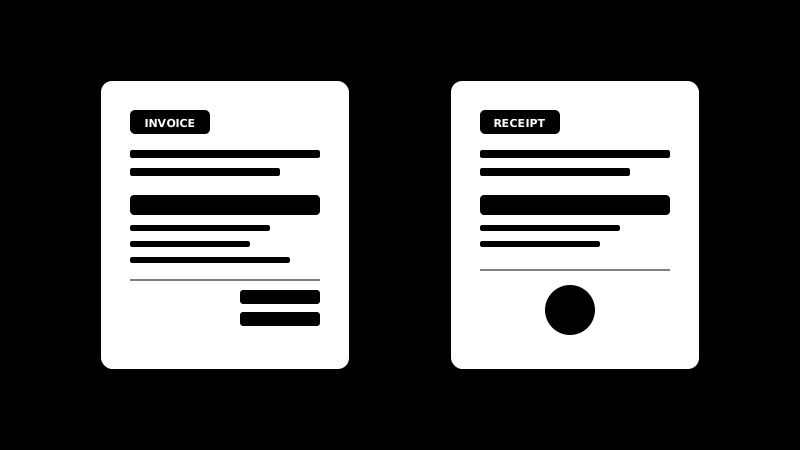
Invoices and receipts are two of the most common business documents, yet many people confuse them. While they may look similar, they serve fundamentally different purposes in the payment process. Understanding the distinction is crucial for proper bookkeeping and tax compliance. As Investopedia explains, an invoice is a time-stamped commercial document that itemizes a transaction between a buyer and a seller.
What Is an Invoice?
An invoice is a request for payment sent before a transaction is completed. It's a formal document that tells your client how much they owe, what for, and when payment is due. Think of it as a bill.
Key characteristics of an invoice:
- Sent before payment is received
- Includes payment terms and due date
- Contains a unique invoice number for tracking
- Lists itemized products or services with prices
- May include tax calculations
- Serves as a legal record of the transaction
What Is a Receipt?
A receipt is a confirmation of payment issued after money has been received. It proves that a transaction took place and that the buyer has fulfilled their payment obligation.
Key characteristics of a receipt:
- Issued after payment is received
- Confirms the amount paid and payment method
- Serves as proof of purchase for the buyer
- Used for expense tracking and tax deductions
- Usually shorter and simpler than an invoice
Key Differences at a Glance
Here's a quick comparison:
- Timing: Invoice = before payment; Receipt = after payment
- Purpose: Invoice = request money; Receipt = confirm money received
- Payment terms: Invoice includes due date; Receipt does not
- Issued by: Both are issued by the seller/service provider
- Legal use: Invoice can be used to collect debts; Receipt proves payment
When to Use an Invoice
Use an invoice when:
- You've completed work and need to bill a client
- You're selling products or services on credit
- You need to track outstanding payments (accounts receivable)
- You require a formal, numbered document for accounting
When to Use a Receipt
Issue a receipt when:
- You've received payment and want to confirm it
- A client requests proof of payment
- You're completing a point-of-sale transaction
- You need to document cash payments
Do You Need Both?
Yes! Best practice is to send an invoice to request payment and then provide a receipt once payment is confirmed. This creates a complete paper trail for both parties. In ProeInvoice, you can mark invoices as "Paid" to track which payments have been received. For more on recordkeeping requirements, see the IRS recordkeeping guide for small businesses.
Need to create a professional invoice? Sign up for free and start invoicing in minutes.